
Before you pay a lead generation agency or data vendor, you will probably open its Trustpilot page. The star rating takes two seconds to read, but it tells you far less than the labels, dates and complaints underneath it.
This guide shows you how to read lead generation company Trustpilot reviews properly, then confirm what you find with a small paid test before you sign anything long term.
Why lead gen buyers check Trustpilot first
Lead generation is hard to judge before you buy. You can't inspect a list until you've paid for it, and an agency's outbound results take weeks or months to show up.
Reviews are the closest thing you get to a preview. Trustpilot in particular lets anyone post about a company, whether or not the company has claimed its page, and many vendors in this space put the badge on their sales pages.
The catch is that Trustpilot does not fact-check what reviewers say. Its automated screening removes some fake or rule-breaking content, but the platform openly says it won't catch everything. Treat the page as evidence to weigh, not a verdict.
How Trustpilot reviews are collected (invited vs organic)
Reviews arrive by two routes. Either the company sends a review invitation after a purchase, or the reviewer finds Trustpilot on their own. The profile and each review card tell you which route was used, if you know where to look.
Labels worth reading:
- Verified on a review means Trustpilot could confirm some business interaction took place. It does not mean the reviewer's claims are accurate, only that they were probably a real customer.
- Unprompted review means the person came to Trustpilot without an invitation. Unhappy customers are overrepresented here, because frustration is a strong motivator.
- Asks customers to review on the profile means the company sends invitations. Trustpilot states these go out to customers regardless of whether their experience was good or bad.
- No recent history of asking for reviews comes with a warning from Trustpilot that the reviews may not be representative.
- Claimed profile and Paid Trustpilot subscription mean the company manages the page, and the paid plan gives it extra tools. Trustpilot's rules say companies can't offer incentives for reviews or pay to hide them.
What this means in practice: invited reviews skew positive because satisfied customers who would never bother get a nudge. That isn't fraud, but it lifts the score.
Profiles with only organic reviews skew negative for the opposite reason. And a company that doesn't send invitations yet still gets a steady flow of glowing unprompted reviews deserves a closer look, since happy customers rarely seek out review sites in large numbers on their own.
Reading the TrustScore: review count, recency and distribution
The headline number blends everything together. Pull it apart with these checks:
- Total review count. With only a few dozen reviews, a handful of new ratings can move the score noticeably. A 4.8 from 15 reviews is a much weaker signal than a 4.3 from 400.
- Reviews in the last 12 months. The profile shows this figure. A page with 120 reviews but only 20 from the past year mostly describes an older version of the company.
- The most recent 20 reviews. Sort by most recent and read them in order. Data vendors change fast: a data source gets cut off, a fulfilment team turns over, demand outgrows capacity. Look for the month where the tone shifts.
- Star distribution shape. A healthy profile is mostly 5s and 4s with a thin tail of 1s. A barbell shape, with lots of 5s, lots of 1s and almost nothing in between, means either delivery is inconsistent or the 5s did not arrive the same way the 1s did.
- Date of experience vs date posted. Each review shows both. A batch of five-star reviews posted on the same day about experiences weeks apart can point to a review drive.
- Reply rate to negative reviews. The profile shows what share of negative reviews the company answered and how fast. A low reply rate with slow responses tells you how you'll be treated if your order goes wrong.
Here's how two hypothetical vendors compare once you look past the score:
| Check | Vendor A | Vendor B |
|---|---|---|
| TrustScore | 4.6 | 3.8 |
| Total reviews | 210 | 125 |
| Reviews in last 12 months | 70 | 22 |
| Collection | Invites customers | No recent invitations |
| Reply rate to negative reviews | Two-thirds | Under one in five |
| Recent trend | Steady | Mostly 1-star, a few templated 5-star |
Vendor A's score is inflated a little by invitations, but the recent pattern is stable and complaints get answered. Vendor B's lower score is actually flattering once you see what the last few months look like.
Red flags in lead generation company Trustpilot reviews
None of these proves a review is fake. Two or three together should make you slow down.
- Same story, different names. Several five-star reviews that open the same way, praise the same single thing (usually delivery speed) and close with the same promise to come back.
- Praise that never mentions the data. A data vendor's happy customers should talk about bounce rates, accuracy or replies. Reviews that only say 'fast' and 'great support' tell you nothing about lead quality.
- Five-stars sandwiched between complaints. Positive reviews landing right after a run of one-star posts, especially when the angry reviewers mention that the new five-stars look suspicious.
- One-review accounts. Click the reviewer's name. A profile with a single review, no location and a generic name is weak evidence either way.
- Copy-paste company replies. The same apology about 'technical issues, now fixed' pasted under a dozen complaints, with no specific resolution.
- Replies that attack the reviewer. Every vendor has difficult clients, but public replies that accuse customers of lying or blackmail tell you how disputes get handled.
- Influencer-driven reviews. Reviewers who say they bought because a YouTuber or course creator recommended the vendor. Those recommendations are often affiliate deals, so they say nothing about quality.
- Vague claims about results. Five-stars from agency clients that mention 'great results' without saying what kind: meetings, replies or revenue.
What the 1- and 2-star reviews tell you that 5-star ones don't
Five-star reviews describe the happy path. Low-star reviews show what happens when something breaks, and that failure handling is a big part of what you're paying for.
Read every 1- and 2-star review from the past year and sort each complaint into a bucket:
| Complaint pattern | What it suggests | Ask before buying |
|---|---|---|
| Late or missing delivery | Manual fulfilment or capacity problems | What is the delivery deadline in writing, and what happens if it's missed? |
| Fewer leads than ordered | Invalid records stripped out after payment | Am I charged for invalid or catch-all emails? |
| Wrong targeting (wrong country, excluded job titles included) | Weak filtering or a manual process | Can I see a sample built to my exact spec? |
| 'Verified' file full of catch-all addresses | Loose definition of verified | How exactly do you define a verified email? |
| Refund ignored or denied on a technicality | Guarantee is mostly marketing | Send me the refund terms and guarantee conditions in writing |
| Inflated reporting (auto-replies counted as replies) | Agency metrics can't be trusted | How do you count replies, interested leads and meetings? |
One bucket with several complaints is a pattern. Scattered one-offs across different buckets is closer to normal noise for any vendor that ships a lot of orders.
Pay special attention to long, detailed disputes between a client and an agency. You don't need to decide who's right. These threads often reveal the actual contract terms, such as how a results guarantee is measured or what the client must do to stay eligible for a refund.
Also look for reviews updated from one star to five after the vendor fixed the problem. That's a good sign, but note how long the fix took. A replacement list that arrives three weeks late can still wreck a campaign timeline.
Checking 'verified lead data' claims with a small test order
'Verified' has no standard meaning in this industry. It might mean every email passed a mailbox check, or it might include catch-all addresses that accept everything and tell you nothing. Reviews can't settle that. A small paid test can.
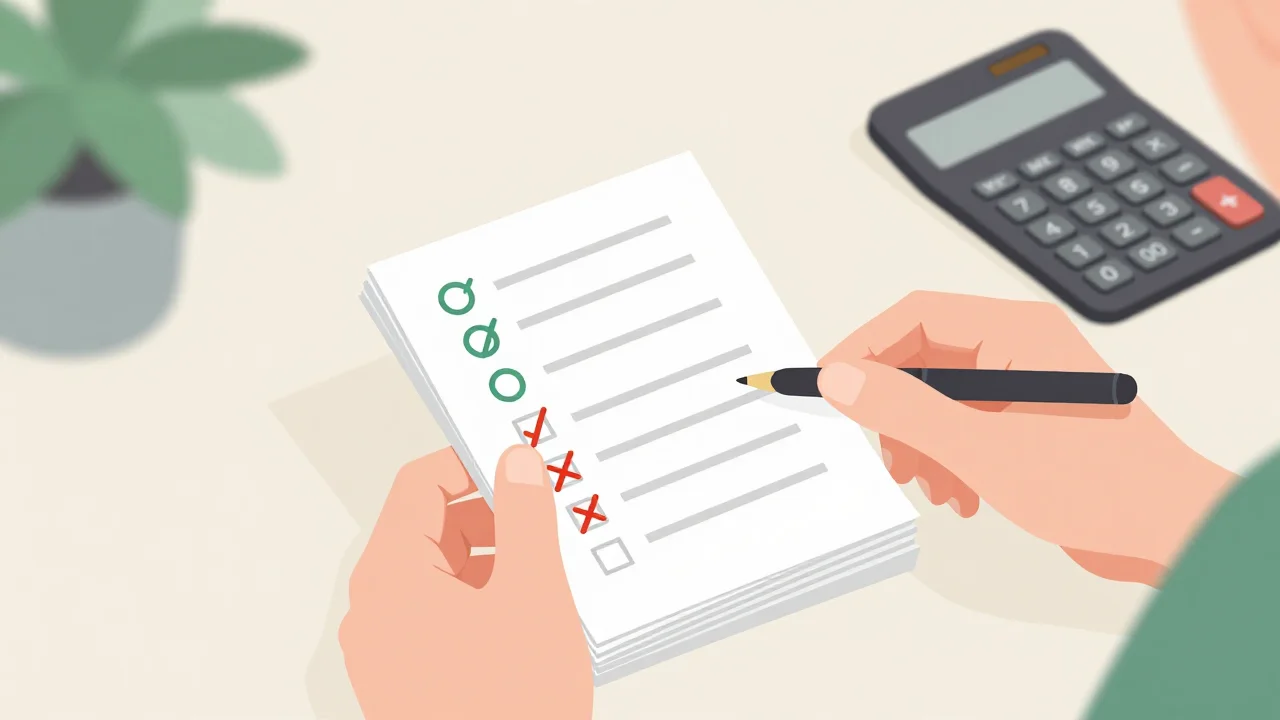
- Write a precise spec. Industry, location, company size, job titles to include and exclude, and the fields you need. Example: HVAC companies in Texas, 1-50 employees, owner or general manager, with email and phone.
- Buy the smallest paid package. Don't rely on a free sample the vendor hand-picks. You want a file produced by the same process as a full order.
- Count the rows. Check that you received what you paid for, and note how many rows are missing an email or a name.
- Verify every email yourself. Run the whole file through your own verification tool rather than trusting the vendor's labels. Here's why verifying before you send matters.
- Spot-check 25 random rows by hand. Open the website, confirm the business fits your spec and that the named person actually works there.
- Calculate cost per usable lead. Usable means a valid email and a correct target. This is the only number that lets you compare vendors fairly. See what lead lists really cost.
- Decide your pass mark in advance. Write down your minimum valid-email rate and on-target rate before the file arrives, so a slick delivery doesn't talk you out of your own standard.
A worked example with made-up numbers:
- Ordered 500 leads for $150
- Received 470 rows
- Verification: 300 valid, 110 catch-all, 60 invalid
- Hand check: 19 of 25 rows matched the spec (76%)
- Usable leads: 300 valid x 76% = about 228
- Cost per usable lead: $150 / 228 = about $0.66
That looks very different from the advertised price of $0.30 per lead. Now you can compare it honestly with other options, including building the same list yourself.
If the test passes, still clean the file before outreach and send to a small batch first so a bad segment can't damage your sending domains.
Cross-checking with Reddit, Quora and other sources
Trustpilot is one source. Before paying anything significant, spend 20 minutes on these:
- Reddit. Search the vendor's name plus words like 'refund', 'scam', 'legit' or 'review'. Threads in sales, cold email and agency subreddits tend to be blunt. Check the poster's history, since some vendors seed their own recommendations.
- Quora. Lower signal. Many answers are promotional or written by people selling something related. Use it to find names to investigate, not to reach conclusions.
- YouTube. Useful for seeing a product in action, but check the description for affiliate links before taking a recommendation at face value.
- Other review sites and complaint boards. If the vendor is listed elsewhere, see whether the complaints match. The same issue reported on several platforms is hard to dismiss.
- The company itself. Look at domain age, whether named team members exist on LinkedIn, and whether there is a real address and phone number.
- References. Ask for two current clients in your niche you can speak to directly. A vendor that won't provide any is telling you something.
Whatever you choose, pay by card for the first order. It gives you a dispute route if nothing is delivered.
Questions to ask a lead gen agency before signing
Send these by email so the answers are in writing:
- Where does your data come from, and how often is it refreshed?
- How do you define 'verified', and are catch-all emails included or charged for?
- What happens if I receive fewer usable leads than I paid for?
- What is your delivery deadline, and what do I get if you miss it?
- Can you produce a paid test of 200-500 leads to my exact spec?
- For managed campaigns: how do you count replies, interested replies and meetings? Are auto-replies excluded?
- Who sends the emails, from which domains, and who owns those domains if we part ways?
- What are the exact conditions of your guarantee, and what would make me ineligible?
- What is the minimum contract length and notice period?
- Who is my point of contact, and what is your typical response time when something goes wrong?
Vague answers to questions 2, 3 and 8 line up with the most common complaints you'll see on Trustpilot. Treat them as the deciding questions.
When building your own lead list is the safer bet
If your targets are businesses with a public footprint, such as local service companies, e-commerce brands, SaaS products, creators or community owners, you may not need a middleman at all. The data a vendor sells is often built from the same public sources you can search yourself.
Building your own list removes most of the risks above. There's no delivery deadline to miss, no hidden filtering, and you can see exactly which records you're paying for. The trade-off is your time, which is where tooling helps. Here's a fuller breakdown of buying lead lists vs building your own.
Prospect Cheap collects live leads from Google Maps, Yelp, Trustpilot, YouTube, the Facebook Ad Library, Product Hunt, TrustMRR and Skool, then uses AI to pull emails, the owner's name and title, phone numbers and social profiles from each business's website. Pricing is one credit per lead found, and the 150 free credits are enough to run the same spec you would give a vendor and compare cost per usable lead side by side.
Once the list is filtered, you can export a CSV or send it directly to Instantly, Smartlead, lemlist or GoHighLevel, which skips the file-wrangling step entirely. If you're starting from zero, this guide on how to build a lead list from scratch walks through the process.
An agency still makes sense when you genuinely want done-for-you outreach and have no time to run campaigns. In that case, the review checks and paid test above are how you pick one that won't waste your retainer.
Next steps
- Open the vendor's Trustpilot page and note the collection label, 12-month review count and reply rate.
- Read every 1- and 2-star review from the past year and sort them into the complaint buckets.
- Search Reddit for the vendor's name plus 'refund' and 'scam'.
- Email the ten questions and keep the answers.
- Run a small paid test, verify every email, and calculate cost per usable lead.
- Run the same spec yourself and compare before you commit to anything longer.